

Last updated: 5 October 2026

The Deep Desert is where Dune: Awakening stops being a survival game and starts being a genuine endgame gauntlet. It is bigger than Hagga Basin as it holds the best resources in the game, and it can also end your run in seconds if you walk in unprepared. If you are someone who is also looking for ways to enter the Deep Desert, how its zones and PvP rules work, and what to actually do once you are inside, then this guide covers it all. Can
If you are new to Arrakis and haven’t bought your game yet. Grab Dune: Awakening at the best price on Driffle so that you can start your game and explore different regions.
What Is the Deep Desert?
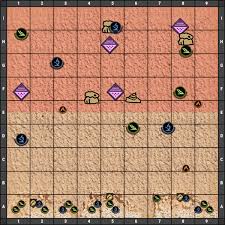
The Deep Desert is Dune: Awakening’s primary endgame region, and it is on a completely different scale from anything in Hagga Basin. The map runs as a 9×9 grid of 81 tiles, covering roughly 500 square kilometers, which makes it several times larger than the entire Hagga Basin map. It is also not marked on the game’s standard map, so plenty of players spend their early hours without even realising exactly where it is.
This is the only place in the game where you can harvest meaningful amounts of Spice, alongside rarer resources like Titanium Ore and Stravidium Mass that you simply cannot get anywhere else in useful quantities.
How to Enter the Deep Desert
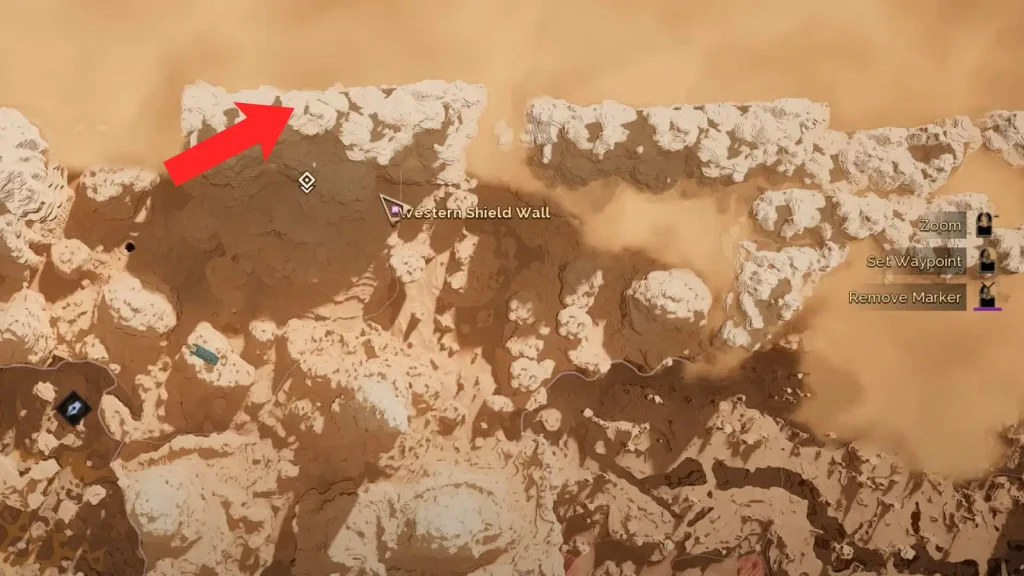
Getting into the Deep Desert is not as simple as flying off in a random direction. Here is the full process.
Step 1: Complete the Shield Wall Questline
Access to the Deep Desert is locked behind the Shield Wall questline in Hagga Basin. You need to finish this before the Overland Map even gives you the option to travel there.
Step 2: Gear Up Before You Go
The Deep Desert punishes anyone who shows up underprepared. Before heading out, make sure you have:
- An Ornithopter, since it is the only way to cross into the Deep Desert
- Full fuel and a few spare fuel cells
- A heat-resistant survival suit and hydration supplies
- A Scan Module fitted to your Ornithopter for loot detection
- Thumpers, repair kits, and a loadout ready for tougher enemies than you are used to
Step 3: Fly to the Overland Map and Pick a Gate
Pilot your Ornithopter to any edge of Hagga Basin to transition onto the Overland Map. From there, track the Deep Desert on your HUD, which sits to the northwest, and choose one of the three southern entry gates in the A-row. Different gates can lead to different starting conditions, so picking the middle gate is generally the safest option for a first trip.
A Few Things New Players Often Miss
- Where you exit matters: When you return to Hagga Basin, you come back through the same side you originally left from, so plan your exit point.
- NPC taxis will not take you there: You need your own Ornithopter. There is no shortcut around this.
- Scanning tiles gives XP: Every tile you scan while exploring rewards experience, so it is worth doing even if you are not actively farming.
Ready to start your own Deep Desert run? Buy Dune: Awakening at the best price on Driffle and get your Ornithopter in the air today.
Understanding the Deep Desert’s PvE and PvP Zones
This is the part that catches new players off guard the most. The Deep Desert is not uniformly dangerous. It gets progressively more hostile the further north you travel.
| Row | Zone Type | What to Expect |
| A (southernmost) | PvE only | Safe entry zone, ideal for solo play and early looting |
| B to D | Transition zones | Tougher enemies, testing stations, still relatively safer |
| E | Mixed | First appearance of Stravidium and Titanium Ore |
| F to I (northernmost) | PvP | Full player versus player combat, highest risk and reward |
A few exceptions worth remembering: Shipwrecks and Control Points are always PvP zones, regardless of which row they sit in. You can be standing in an otherwise safe A-row tile and still get jumped if you wander into one of these specific locations.
If you want to avoid combat entirely, stick to A-row tiles and keep an eye on the map before pushing further north.
The Coriolis Storm: Why the Map Keeps Changing
Every week, a massive Coriolis Storm sweeps across the Deep Desert and resets the region. This is one of the most important mechanics to understand before you invest heavily in a base out here.
- The storm typically hits on a weekly cycle, commonly associated with Tuesdays.
- It reshuffles loot spawns, terrain, and base layouts across the entire map.
- Any base left standing when the storm hits can be destroyed.
- Dismantling your base before the storm lets you recover your materials in full, so timing your exit matters as much as timing your entry.
This is also why the Deep Desert never gets stale. What was a quiet, resource-rich tile one week can be a completely different layout the next.
What to Actually Do in the Deep Desert
Harvest Spice
Spice is the single biggest reason most players make the trip. Keep an eye out for Spiceblows, large eruptions that leave a rich patch of Spice behind on the sand. Harvesting it properly requires a Spice Refinery back at base to turn raw Spice into usable Spice Melange.
Mine Titanium Ore and Stravidium Mass
These show up starting around the E-row and become more common as you push deeper. Both are essential for crafting some of the game’s higher tier gear, and neither is realistically farmable anywhere else.
Build a Base, Carefully
A base in the Deep Desert comes with real advantages, including cheaper resource refining in some cases. The tradeoff is the weekly Coriolis Storm, so most experienced players treat Deep Desert bases as temporary rather than permanent, dismantling and rebuilding as needed.
Watch for Sandworms
Sandworms patrol the open sand just as they do in Hagga Basin, if not more aggressively. Flying at a higher altitude and watching for disturbed sand below helps you spot trouble before it finds you.
Deep Desert Survival Tips
- Separate your runs by purpose: Dedicate specific trips to ore gathering and others to Spice runs rather than trying to do everything at once
- Always carry a Scan Module: It massively speeds up finding loot and resource nodes across such a huge map
- Know your exit route before you need it: Getting chased deep into PvP territory with no plan to escape is how most Deep Desert runs end badly
- Dismantle before the storm: Losing a base to the Coriolis Storm because you lost track of the weekly reset is one of the most common and avoidable mistakes
Still learning the basics of Arrakis? Our Dune: Awakening beginner’s guide covers what to prioritise before you ever set foot in the Deep Desert.
Ready to Explore the Deep Desert?
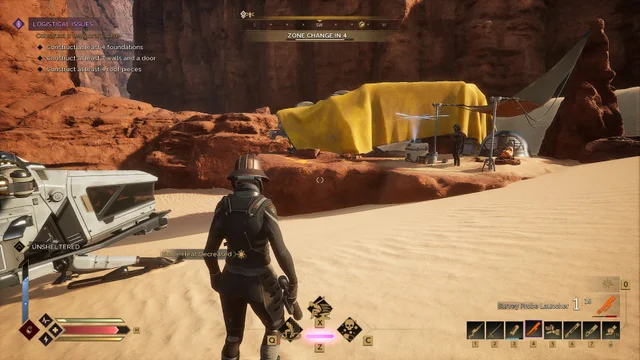
The Deep Desert is where Dune: Awakening’s endgame really opens up, with the best resources in the game guarded by sandworms, rival players, and a storm that rewrites the map every week. Get your preparation right, and it becomes one of the most rewarding parts of the entire game.
For a full breakdown of every other region on Arrakis, check our complete Dune: Awakening map guide. Head over to Driffle to buy Dune: Awakening at the best price, with fast digital delivery so you can start your journey toward the Deep Desert today. We hope you found this blog helpful. Let us know your thoughts in the comments.
Frequently Asked Questions
Q.1. How do I get to the Deep Desert in Dune: Awakening?
Answer: Complete the Shield Wall questline in Hagga Basin, then fly your Ornithopter to the edge of the map to access the Overland Map. From there, choose one of the three southern entry gates into the Deep Desert.
Q.2. Is the Deep Desert PvP or PvE?
Answer: Both. The southern A-row is PvE only, making it safe for solo exploration. As you travel further north through the grid, the zones shift into full PvP, with Shipwrecks and Control Points always being PvP regardless of row.
Q.3. How big is the Deep Desert map?
Answer: It is a 9×9 grid of 81 tiles, covering roughly 500 square kilometers, making it several times larger than Hagga Basin.
Q.4. What is the Coriolis Storm?
Answer: A weekly storm that resets the Deep Desert, reshuffling terrain and loot and destroying any bases left standing. Dismantling your base beforehand lets you recover your materials in full.
Q.5. Can I build a permanent base in the Deep Desert?
Answer: Not really. Since the Coriolis Storm resets the region weekly, most players treat Deep Desert bases as temporary setups rather than long-term homes.
Q.6. What resources can I only get in the Deep Desert?
Answer: Spice in any meaningful quantity, along with Titanium Ore and Stravidium Mass, is effectively exclusive to this region.
Q.7. Do I need a group to survive the Deep Desert?
Answer: Not necessarily. The A-row PvE zones are genuinely solo-friendly. Pushing further north into PvP territory is where a group starts to matter a lot more.


